Free U.S. Shipping on Orders Over $40
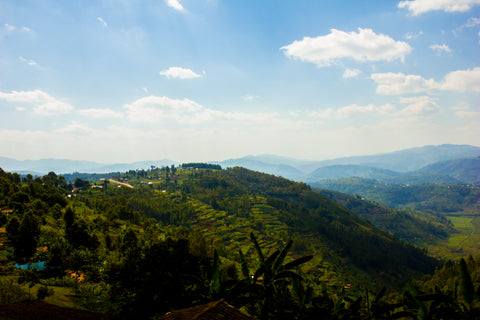
Rwanda is a beautiful country. Colloquially referred to as land of a thousand hills, it lives up to its name. Driving out of Kigali you immediately start climbing into a intensely lush mountain landscape. A very small country, nearly all hillsides are full of homes tucked into what could only be described as huge gardens. Each persons’ medium sized plot of land is divided up into countless smaller plots of cabbage, carrots, plantains, palm, or hundreds of other fruits and vegetables. Entering different coffee growing regions here was unique, unlike any other coffee region in any other country in the world. Usually you arrive in a coffee region and you are surrounded by 90% coffee with a few patches of sugar cane or palm. Here in Rwanda, the lush mega-mini gardens continue with the exception of the appearance of patches of coffee within the green landscape. (The only crop which appears to dominate large swaths of land is tea.) It was in one such area that we visited Tumba.
Our words to live by when sourcing are, “Good coffee comes from good people.” This was so true with Vincent (Venustre) Mugraneza. He owns and operates Tumba washing station in Rulindo district, Rwanda. We visited him for the first time this last year, and learned that he purchased this washing station a few years ago with the goal of improving his community. As a school teacher in the nearby town he saw that nearly everyone around this area grows at least a small amount of coffee. His goal being to create economic and social opportunity, he decided coffee was the best platform to impact the largest amount of people.
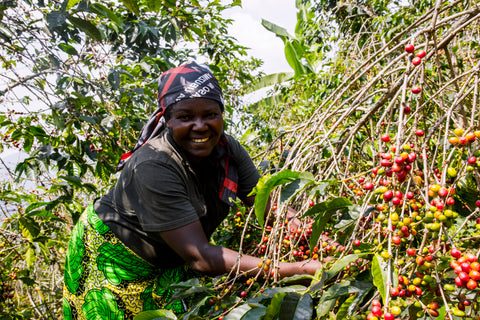
Vincent is a pragmatic businessman, and we related immediately with his point of view that doing good and doing good business are in no way mutually exclusive. He has an incentive driven business with multiple tiers of payment depending on the quality of cherries delivered, the price he is able to get from buyers, and the amount of time farmers work with him. One of the keys to creating a sustainable coffee purchasing model is setting up a system which encourages producers to develop a sense of constant improvement. Often we see programs fail when either higher prices are paid without correlating them to quality, or low prices continue but roasters “reinvest” later in a charity type model. Both of these create an unsustainable model in which good growing practices are not directly linked to rewards.
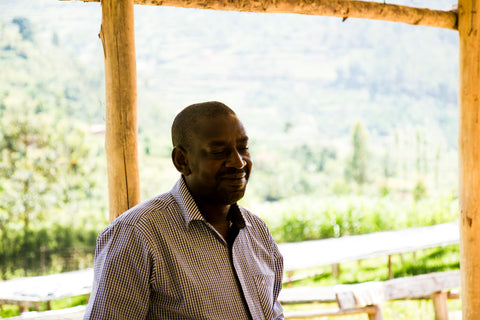
Tumba is the type of model which works. It doesn’t ask for charity or artificial prices, rather gives producers the tools they need to be self sufficient and rewards good results with good prices. Vincent has a program in which he rewards better quality not only with price increases, but subsidies for equipment and supplies, health care for families, and profit sharing in the form of a dividend. As you may expect, his coffee was one of the top lots we tried in the entire time we were in Rwanda. Proof again that good coffee comes from good people.

Headquartered in Denver, Colorado, Corvus Coffee Roasters takes a direct, relationship-driven approach to sourcing and roasting. Founded in 2010 by Phil and Autumn Goodlaxson, the company is known for multi-year producer partnerships, a Farmer Focus Program, and strong internal training and benefits for staff. Corvus emphasizes storytelling, public engagement, and initiatives that support gender equity and inclusion across its operations.

For Goodlaxson, a smaller menu isn’t about exclusivity. He wants Corvus to feel approachable for anyone who walks in, whether they already follow specialty coffee closely or not. Winning over a customer who’s never paid attention to single-origin coffee is more meaningful to him than competing for the attention of those already immersed in the scene. By keeping the emphasis on quality, he hopes to spark curiosity that can grow over time.

what we’re most proud of is the way that we do business at origin, and how those values translate to how we do business here in the U.S. The transfer of this knowledge that only comes from knowing the farmers we work with and working with them in person, to our partners is our key differentiator.


