Free U.S. Shipping on Orders Over $40

As with the world in biking, there is never a set definition of training. Because every day, moment, or experience is all building the foundation for a greater self. So as the months loomed towards heading to Knoxville, the pinnacle skills required are organizing, time management, and confidence for goals. Being the first season for brewers competition creates a truly mystifying door painted in front of the self as opening it could lead anywhere. So what is important out of this experience? For being a barista at Corvus Coffee, it was important to hone in on consistent qualitative customer service for every order. Because every customer is just as much of a judge as the event officials are.
In the beginning months of December, the production team at Corvus began to help with learning how to use the Hukey, sample roaster with the guidance of Morgan, production manager. It was then the awareness expanded on how each minute variable creates so much drastic sensory effects in the final product, a light roasted bean ready for brewing delight. Countless beans were smelled, eaten, grinded, cupped, burnt, loved, and brewed for the sake of objective observation. Air flow, gas pressure, development time after first crack, and visualization are all continual variables always changing which is why every batch roasted is unique.

Seeking out support from the Denver community also played a key role in evolution. Kal from Amethyst lent the Roaster’s Companion Guide from Scott Roas. Jay, Corey and Chris from Little State Coffee and Middle Owl worked on compulsory techniques with the aeropress and overall presentation. Cherry Roast hosted a workshop for all competitors to practice and ask questions to eachother. Being supported means having vulnerability and an open mind. Corvus provided a platform to practice anytime and hugs were always free from every customer and team member.
While this was the first brewers competition, Coffee Masters was fresh on the mind in regards to how to pack. Because anyone with 60 pounds of coffee equipment and supplies needs a rolling bag and the possibility is real to carry competition coffee around at the airport. Things get lost, broken or misplaced while traveling so always bring what is needed plus one. And utilizing google to know where the closest grocery or art stores is vital. This was the second time to be competing and traveling alone from Corvus. It is never ideal as the whole weekend is extremely overwhelming meeting new friends, reciting presentation over and over, and dialing in coffee on a nervous palette. When the opportunity can present itself, always bring a support team.
The presentation was set to be on the same day at the March for Women on January 21st. Marching and uniting with dear sisters across the world is what waking up for means everyday. However Erica from Variety Coffee put it very well when interviewing her for the Cherry Roast Presents Podcast, “This is our profession and we need to make a stand for being women in a white male industry.” The hours leading up to presentation were blurred with prep dancing to Beyonce with mother in the hotel room, triple checking of everything needed and yet still forgetting vital supplies. On stage the personal intention was set to be shining white light of hope in honor of grandmother, mother and all the women known in life.
After blacking out for the entire length of presentation, knowing every line of the poem was recited and the chemex of the Las Lajas Red Honey was brewed within parameters, the rest of the day of relaxation and networking could finally be had. Going to any networking event, always bring business cards, a witty sense of humor, a cliff bar, and the willingness to meet and remember the names of many people. As a representation of the company and city, what should be remembered?
Moments before leaving the convention, after serving some brewed coffee to audience members, and knowing the plane would be departing in a little over an hour, a women stopped to talk about how much the presentation meant to her. She went on to say that her interest in coffee was sparked again and was thankful for confidence and courage to compete. Leaving from Knoxville, as the place (32/36) was not the most expected, there was the realization that the whole reason for that trip was to plant a seed for her and for others. And though the glory and glamour of being announced as top 12 was not in the fates and cards, another success and honor replaced it with the same caliber.
There will always be another hill to climb up through constant cadence and dedication. There are times when support and help from others is refreshing water given to refocus and rehydrate. And then there are the unexpected judges encountered in life whether behind the counter or in front of a crowd that sees what we are doing and creates instant change in direction. The next journey through the painted door is decorated with visions of IWCA, Seattle SCA, and fostering Denver community coffee growth with Corvus Coffee.
What does your door look like?

Espresso culture is a funny thing. It’s heavily rooted in tradition while at the same time being loosely defined and constantly redefined by the industry. Even as late as the time of Mozart, Yemeni royalty was drinking a beverage made of the dried fruit of the coffee plant—what we now refer to as cascara—instead of the roasted seeds or “beans” from inside the cherry which we do today. Even the ritual of standing in the corner and slamming a ristretto back like a RedBull has evolved into slowly sipping and waxing poetic over the nuances of the coffee served with elaborate presentations.
Those of you who have been making espresso for a while like me have probably noticed a significant change in the espresso recipe meta in the last couple of years. When the craft coffee industry found me, I was taught to stick to this one recipe: 19 gram dry dose, 29 gram yield, in about 27 seconds. It’s a fairly classic recipe for espresso, but the coffee being used in my cafe for espresso was not exactly classic or traditional. It was a bright juicy blend of Latin American and Ethiopian coffees by Counter Culture Coffee Roasters. The above recipe was designed to work well with darker roasted coffees. That ratio of dose to yield accentuates acidity (which dark roasts have very little of) and maximizes body so you get a syrupy bittersweet espresso.
Apply that same above recipe to modern coffees that are much higher in acidity and have more flavor notes like “citrus and flowers” rather than “nuts and dark chocolate” and you’re going to get something so dreadfully under-extracted and sour that you’ll wonder if you took a sip of espresso or if part of your breakfast just came back up. The reason for this is that lighter modern roasted coffees are less broken down and water soluble so it’s harder to extract all the sweet flavors with the same amount of water(or yield) than with a darker roast.
For this reason, we in the industry began greatly increasing the amount of espresso we brew from the same amount of dry grounds and found that we started achieving delicate, sweet, nuanced and vibrant flavors from the coffees rather than a rip-your-face-off intensity of acidity. When I began at Corvus in 2014 our starting point for espresso looked something like a 23 gram dose and a 29 gram yield. The espresso was…assertive. Today, our starting point is an 18 gram dose to around a 45 gram yield. Sound crazy to any of you? But with that ratio you can get sweet juicy candied berry flavors out of an Ethiopian coffee like our Kayon Mountain for example rather than just a generic sourness. If you had told me in 2012 that I would be pulling 50 or more grams out of 18 grams of coffee I would have probably laughed at you.
If you’re that person who tried to pull shots of a single origin coffee you were sold by an enthusiastic barista and it didn’t turn out too well, try something similar to the 18-45 recipe above and see the difference! And who knows, if we find new ways to make bright modern coffees more soluble somehow, the espresso recipe meta could shift right back to ristretto style. So as always, keep an open mind and taste everything!

The act of making espresso is simple. There is a bit of technique involved, but generally the physical movements required to prepare a shot of espresso can be taught in a matter of a few minutes. What makes an espresso actually taste good has more to do with the recipe you use. Knowing how to effectively adjust your recipe to improve flavor is not always common knowledge among enthusiasts. Eliminating variables wherever possible makes it easier to understand what is actually going on, so I always recommend keeping the dose consistent.

The Dose, sometimes called the “input” is simply the weight of the ground coffee in your portafilter basket. If you don’t know the weight, grab a kitchen scale that can measure in grams. You will want to fill the basket with the amount of ground coffee that the manufacturer recommends, and it is usually printed or etched on the side of the basket somewhere. For example, here at Corvus we have 18-gram portafilter baskets so all of our recipes use that dose. Sticking to this weight within a gram or two is a really good idea.

Funny things start to happen when you play around with the dose. Let’s take a step back and think about what’s actually happening in the portafilter when you brew an espresso (forgive me if this gets a little nerdy!) First, boiling hot clean water hits the top of the coffee bed. Then, it’s forced under pressure to navigate its way through seemingly infinite pathways through the coffee grounds, and we hope it does so as evenly as possible as it grabs and dissolves flavor along the way. As it’s doing this though, that clean boiling water is dropping temperature and turning into espresso so that by the time it reaches the bottom of the coffee bed grounds are being brewed into espresso with espresso! Increasing or decreasing your starting dose changes the depth (and the shape of the coffee bed) that the water has to travel through. This is going to change the time the water takes to get through the coffee bed, increase difference between the temperature at the top and bottom changing the types of flavors extracted along the way and many other things I can’t even think to name! Don’t worry, I won’t bore you with the Noyes-Whitney equation…
Keeping your starting dose consistent will simplify your life and get you to a delicious, dialed-in shot of espresso much quicker. You’ll also be able to understand and nail down the other more easily controlled variables and how they change the way your shots taste—things like grind size, total brew time, and how much espresso you decide to brew or the yield; more on that later!


This particular coffee is pretty special for a lot of reasons. Finca Genesis is actually the first producer that Phil ever directly sourced coffee from. Also, “black honey” refers to the type of processing method the beans undergo before they are shipped. Specifically, after the seeds(beans) come out of the coffee cherries, they are laid out to dry in the sun on raised “beds” which are basically elevated screens. The beans have extra mucilage(coffee fruit goop) on them at this point which takes longer than usual to dry which is what the producers refer to as black honey process. It adds a tart complexity and sweetness to the final roasted beans.


The other day I was at the store checking out with a rather inexpensive but decent-looking bottle of wine. When the person at the register noticed the bottle, she exclaimed, “This is an excellent wine! You’ve just got to let it breathe a bit.” I thought this a bit much for an eight-dollar red blend, but I took her advice and decanted it before dinner. It was very good, and this got me thinking. If just a few words in passing could elevate my experience with a cheap wine, why not make the same effort when serving an espresso?
Admittedly, I’ve become fairly particular when drinking coffee and prefer it to be just kind of warm-ish. We humans taste best when whatever we’re eating or drinking is close to body temperature or around a hundred degrees. This is why boiling lava hot pizza doesn’t taste like anything until it cools, and if your PBR becomes too warm it gets abandoned. For me, espresso tastes best once it has cooled quite a bit. I’ll usually stand at the bar stirring my espresso for a minute or two, after which it’s become so sweet, juicy, and delicious that it’s gone in nearly the same time it took to cool down.
But Doug, what about the Thirty Second Rule? Don’t you have to toss a shot and re-make it if the customer doesn’t pick it up right away? To say I don’t subscribe to that notion would be an understatement. Not only does stirring and waiting a minute or so bring the temperature down to an enjoyable tasting range, it also accomplishes something else: It allows the crema a bit of time to dissipate.

What is that crema, anyway? James Hoffman wrote a pretty thorough introductory article here nearly a decade ago detailing the foam that shows up on top of a fresh well-brewed espresso. In short, crema is emulsified gases—largely carbon dioxide—that end up flavoring the espresso so long as it was freshly ground and relatively recently roasted. Unfortunately, crema can be mostly flavored from carbonic acid (that stuff that adds the characteristic tartness to soda water) which will actually mask the flavors in the coffee. If you don’t believe me, spoon the crema off of your next espresso and taste it on its own. Not so good.
James Hoffman (same guy from before) in a 2009 post from his blog Jimseven went so far as to suggest skimming crema completely off before drinking the espresso. Corvus owner Phil revealed to me yesterday over beers at Grandma’s House (our neighboring Brewery) that he also prefers doing this. This seems a bit excessive to me, and others will argue that you lose some of the true expression of the coffee if you do it. I think the best compromise is simply to stir. At the very least, it prevents your first impression of the coffee from just tasting bitter and ashy.
Now’s the part where I say, “But don’t take my word for it… Try it yourself!” So the next time you’re in Corvus or wherever you get espresso, give it a shot!
(pun intended)
By Doug Stone, Corvus Trainer


If you’ve ever been in our shop in the early morning hours you’ve probably thought to yourself, “…what’s that sound??” And upon seeing several of us standing around the production area slurping like a bunch of toddlers eating soup you’ve probably wondered, “what on earth are they doing??” I’ll explain.
Coffee professionals—especially roasters—use a method of tasting called “cupping” to evaluate different coffees. To be honest, it's not a great way to enjoy coffee. Basically, coffee grounds go straight into a small bowl and boiling water is poured on top. Once enough time has passed, a crust that forms on top (like in a French press) which is "broken" and skimmed off. From that point everyone tastes the coffee with a spoon (a special coffee tasting spoon, of course) and slurps the coffee. The bowls containing coffee stay put on the table the whole time.
So, why is this the preferred ritual for evaluating coffees? The main reason is repeatability. The whole brewing process is stripped down to the simplest possible method so it can be easily replicated every time. This ensures all the coffees are on an even playing field so differences in flavor, body, and acidity are all equally evaluated as traits of the coffee versus differences in the ways they each was brewed. We remove all the song and dance of pour overs, batch brewers, and other manual/filter brew methods create a quick and easy way to brew, taste, and share coffees.
Cupping was originally a way for coffee buyers to taste-test many coffees of a particular region at once. Today its usefulness extends to all types of coffee buyers, roasters, coffee educators, baristas, farmers, and even to coffee enthusiasts who decide to attend a coffee cupping.
If you’re interested in coming to a cupping and seeing what it’s all about you can check our website for dates/times and sign up—we usually do a couple per month. If not at least now you know what we’re slurping about when you have to turn your headphones up.
We also took part in a recent survey with Handground and they put together a really cool comprehensive tip list on making V60 pour overs. Check it out and see if you learn anything new.
By Doug Stone, Corvus Trainer

I get asked about French press a lot in the brewing classes we put on every Sunday, so I figured I’d write a blurb about it for you guys. I love brewing on a French press; I can easily make enough for several friends at once, I don’t need a fussy setup with filters, gooseneck kettles, or anything like that, and on a slightly nerdier level the extraction is pretty even—all the coffee touches all the water all the time. Now in general, if you’re aiming for the same qualities in your cup of coffee every time like strength and extraction(1.25% TDS and around 20% Extraction for those keeping track), then your brew recipe should never change. The French press is the one exception. Here’s why.
Water loses energy (heat) quickly. Like, REALLY quickly. On top of that, Denver’s altitude makes water boil much quicker—around 202 degrees Fahrenheit as opposed to 212 degrees at sea level. Now, with pour-over style coffee brewing you have the opportunity to set the kettle back down on the heat to keep the temp up throughout your brew. But with French press you just pour all the water in at once, throw the top on, and wait. In the twenty seconds it takes to do that, the water is already down to around 170. That’s no bueno for coffee brewing. Without enough heat, the water can’t extract all those good bits of flavor, and you end up with a thin, slightly sour tasting, massively unsatisfying brew. So what do we do, Doug??
The reality of brewing a French press in the mile high city is that you just can’t get the same amount of flavor out of your coffee grounds as you can with other styles of brewing. The solution…Start with more coffee grounds! This may seem obvious, but there’s a good reason to avoid doing this in general: Using more ground coffee to get the strength you want in the cup usually means your coffee ends up slightly sour. The sweet flavors—chocolate, caramel, and things like that—are harder to dissolve, so they get left behind causing the coffee to taste out of balance(classic “under extraction”). But here’s the thing about French press: there’s no paper filter to remove all of that coffee silt that ends up in your cup. Those tiny grounds or “fines” add back in those bittersweet flavors that would normally be left out of a more filtered brew. That’s where we’re going to get the flavor balance we want.
Below is a recipe that achieves the strength(TDS) we’re looking for with the right flavor balance as well. You can scale this up for more coffee, just increase both your ground coffee and water proportionately. Give it a try and let me know what you think!
Mile High French Press Recipe
Dose: 30 grams
Brew Water: 400 grams
Final Beverage: 12 ounces1. Grind 30 grams coffee on coarse setting.
2. Add 400 grams water(right off the boil!)
3. Start timer and stir vigorously for 30 seconds.
4. Cap and plunge slightly (about an inch).
5. At 4 minutes, slowly plunge rest of the way.
6. Serve!TLDR: Use this recipe when brewing French press at high altitude!
By Doug Stone, Corvus Trainer


This season we have eight small experimental lots from our friends Roberto & Celeste in Guatemala. These include different varieties processed as honey, sun dried, or pre-fermentation natural coffees. The goal is to roast these small lots in a production setting and give feedback on which ones to focus on in future harvests. This project represents the pinnacle of direct trade sourcing.
Direct trade takes time, investment, and a bit of risk if you are doing it in a sustainable manner. If you are truly dedicated to a partnership with a farmer you will have issues with quality every now and then, problems with logistics, or need to pay a price reflecting the future value of a relationship while a farm gets on their feet.
When that investment results in forward progress, the sharing of risk in a way which challenges both the farm and roaster, and has the potential to increase quality and variety of offerings for the farmer and the roaster/consumer, it's a very exciting thing. We bought all of these experimental lots because we want to support this type of innovation, and Celeste and Roberto feel comfortable making the significant investment in doing these tiny experiments because we have told them multiple times over the last 3 years we have worked together that we would support them in this.
Direct trade isn't just about getting good pictures, great coffees from farmers you meet and never talk to again (or don't buy from again), and interesting stories. It's about forming mutually beneficial relationships that help both parties to learn and grow as coffee professionals. We hope you get the chance to try some of these really exceptional experiments; because the payoff is worth the work, and the proof is in gems like these and the coffees that will come in the next years because of these micro lots.
Colombia is an excellent country to visit, and Huila is one of the most beautiful coffee growing regions I have traveled to so far.

These are some the farmers I met with:

Finca Tablón- Owned by Luis Correa, this farm produced a 89 point lot of coffee I purchased totaling about 8 bags. Luis and his godfather, pictured here, are in a valley of coffee which has some of the steepest slopes I've ever seen for coffee growing. The steepness of the land is offset by the rain they receive nearly every other day, and the town of Tarqui has a very good system of rotating pickers through the seasons of harvesting fruit, cocoa, and coffee to minimize shortages of harvesters (a common problem throughout Colombia).

Finca Porvenir - Owned and run by Sandra Milena Mora and her husband in Palestina, this farm is going to be well known someday. In this picture, Sandra is standing with one of three rust resistant Caturra trees. Without any treatment, these trees are completely free of rust, and she is hoping to get about 1,000 trees from each to plant throughout their farm. Finca Porvenir is managed in a very sustainable manner, using organic fertilizer, fungicides, and blends of minerals which can combat rust on the majority of the farm without negatively impacting the soil. I picked up a 88 point lot of about 14 bags of Caturra coffee from Sandra.

Finca Buenas Aires - Owned by Gustavo Ibanez and run by him and his family. This farm is in a little known area of Acevedo which has produced a solid string of Cup of Excellence coffees over the last 5-10 years because of the unique microclimate and dedication of the farmers who live here. It sits just to the North of the Andes which border the Amazon rainforest. In this small mountainous area, the climate is cooler than the rest of Colombia, and even with climate change having huge impacts on growers throughout Colombia (and the world), it has longer maturation and fermentation times, which lead to a great balance of acidity and sweetness. I wasn't able to cup any of Gustavo's coffee until near the end of my trip and I already had everything we needed, but you could put it up against a table of Ethiopian coffees for the vibrance, citric, and floral notes present in the cup. In case you're curious, Nordic Approach importers bought that particular lot.

Finca Los Angeles - Owned by Maria Bercella Martines. This farm sits just down the hill from Finca Buenos Aires. The food we were served here at finca Los Angeles rivaled the coffee and included some of the best smoked beef anywhere. We found an 89 point lot of coffee totaling about 10 bags from Maria which I think you'll enjoy as much as I enjoyed her smoked beef.

At Finca Los Angeles I also met Cirro Lugo. Cirro is a leader in the community here, and it was great to talk with him about how he views some of the problems facing the Colombian coffee market. Due to the rise in "Specialty Coffee" the demand for coffee from all areas of Colombia has soared, and especially in Huila. The result has not been an increase in the quality of coffee produced, and a lot of times it's been the opposite. Desperate for the Huila brand, coffee importers throughout the "specialty coffee" market have demanded an increase in volume without an increase on standards. Hundreds of people are drinking coffee which was dried in sacks, blended into lots barely scoring in the mid-80's, which is labelled as specialty "Huila" coffee from one sub-region or another.
This demand on quantity without a similar demand for an increase in quality is confusing for the best farmers, who have always worked hard to produce small lots of amazing coffees. They've heard the term "specialty" thrown around and have expected their coffees to receive more appreciation as a result of this wave. Instead, they've seen little other than their coffee being blended into coffee of worse quality than has been produced in the last 10 years. Cirro is one of those people who remains a standard bearer in his producer community. Despite the potential to become jaded from this vaguely explained "specialty movement" he is continually preaching the message of quality from the standpoint of pride in one's work. We're proud to work with an exporter like Alejandro Renjifo who have come into communities like this and has implemented a strict quality standard of purchasing with much higher prices.

The importance of sourcing coffee from growers who have their own code of quality was impressed on me more than ever this trip. Producing coffee is a hard and wonderful life, and the best producers aren't the ones trying to make as much money as possible to escape coffee. They are people who have a deep connection to their communities, families, and their craft. What these people have told me over and over is that they want people to appreciate the work they do, help them improve, and share their coffees with consumers who enjoy it at a similar level to the effort they put into it.
The importance of drinking excellent coffee is immense. Every cup of quality coffee is supporting a person who supports their community standards, family, and their craft through their commitment to excellence. And while none of us can single-handedly fix all the problems in the "specialty" coffee industry, we can help fix them for a few people, and for these people it makes all the difference in the world.
Farm Report- La Palma Y El Tucan/ La Mision
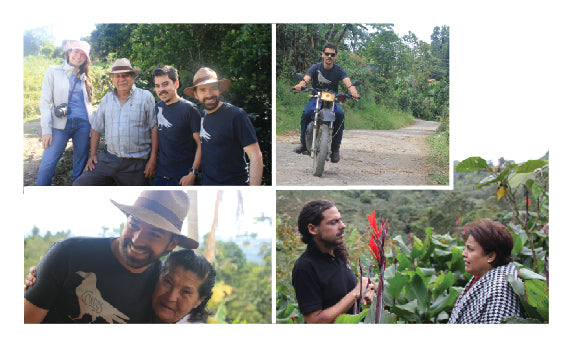
Flying into Bogota, I was expecting to find wonderful coffee in a storied growing region undergoing a renaissance. What I discovered was more of a story about the diligence of the human spirit.
I was going to Bogota after meeting Elisa and Felipe Mandrinan in Seattle at a cupping. I had been talking with Christian Ott, the head buyer for Stone Creek Coffee Co and he mentioned he was heading to a cupping with some Colombian growers who were doing some interesting work in Cundinamarca. I tagged along and was really blown away by the presentation and engagement these folks had around their coffees. Not only are Felipe and Elisa coffee farmers, but they own the mill which produces coffees for a growing number of their neighbors. Their dedication to these neighbors was evident throughout the cupping. The passion in their voices and intensity in their promotion of these coffees spoke to me.
Several conversations, and a few months later I was headed down to Colombia to visit their mill and cup some coffees. Throughout the trip Elisa described in great detail their desire to revive Cundinamarca. She talked about how this region, which lies in the mountains just to the north of Bogota, had once been one of the best growing regions in Colombia. Due in part to the conditions created through a quantity based purchasing program offered by the Colombian Coffee Federation, the region had gone into a steady downward spiral.
I saw this first hand visiting some of the farms they work with through their “Neighbors & Crops” program. Despite owning some of the best farm land in the world for growing coffee, these farms had fallen into disrepair and the coffee was barely being processed to a commercial quality. Not only did the farmers lack an incentive for producing specialty grade coffee, they had no outlet which would offer them additional compensation if they wanted to produce quality coffees. This meant farmers were trapped in a constant state of struggle. Children were leaving for better opportunities in the city, patios were falling into disrepair, pulping equipment and fermentation tanks were disintegrating into the ground.
Enter the “Neighbors & Crops” program by the La Palma Y El Tucan family mill. Felipe and Elisa have built a state of the art wet mill and series of raised drying beds to process coffee to the highest possible standards. Their farm manager Carlos manages agronomists which are available as resources to all their neighbors, and he trains picking crews to travel to their farms and employ quality picking techniques. These are resources which are luxuries to the farmers in the region, but because of La Palma’s willingness to share resources, these farmers are able to produce extremely high quality cherries. The La Palma team purchases the freshly harvested cherries and grades them upon arrival, offering incentives for quality and consistency. The coffee produced here is among the best in the world in my opinion, and the story behind its production is wonderful.
Sometimes you have an experience which changes a paradigm for you. This was one such experience. The La Palma project is not only important because of the quality of the coffee, but because the mindset curated through this project is the mindset essential the future of specialty coffee. Helping farmers create real livelihoods through the production of coffee, sharing resources to create a synergetic growing model, and communicating these things through engagement with roasters and consumers is where the future of the industry lies. On the retail and consumer side of the supply chain we need to place a high value on projects which are creating real sustainability for growers while producing excellent coffee. This coffee, from the La Mision farm, produced by La Palma Y El Tucan, is one such coffee. I hope you have the chance to try it, and I look forward to bringing more coffees with this sort of story to Denver in the future.
• Phil
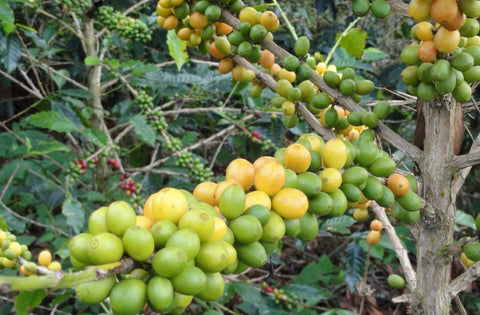
We’ve all seen those “Gone For The Season” signs tacked up in windows of small mountain town shops sprinkled all over Colorado’s back country. Reminding passerby’s and locals of the several months of visitors and memories gone in a flash and never to be forgotten.
Here at Corvus, we experience similar seasonal changes as we go through coffees at the Roast Works. We have been moving through some coffees recently here at the shop so quickly that they may only be on the shelf for a month or two. And in order for you, our valued patron, to understand why we go through coffees so rapidly, I’d like to let you in on couple of our secrets about how we select our coffees and why some are here and gone in what seems to be the blink of an eye.
First, I will share a question one of our employees posed to me the other day. He asked, “Is it just me, are we getting better coffees in, am I starting to appreciate coffee more, or are you doing something different in Roast Works which is improving the quality and taste?”
The simplest answer I could give to this question is we are finding better coffees into our shop. As we get samples in from around the world we find that the more we search, experiment and broaden our horizons, the more often we hone in on better coffees. The reality is, as long as you have exceptional coffees and you seek an understanding of a specific bean, you are going to get an amazing roast.
As a roaster, my goal is to constantly improve at what I do and to offer a better product than I did the day before. To do that, I keep my ear to the ground and broaden our supply chain to extend to find extraordinary coffees which exist out there somewhere. Phil and I are constantly talking about what is needed to find the best coffees and improve the quality of our stewardship of the bean. What we keep circling back to is the basics of bringing in new samples, roasting, and blind cupping as much as possible.
Last month alone we sampled over a hundred coffees before selecting only one. We didn’t look at the region, the price, the importer or a number of other factors in advance; beyond asking for cleanly processed coffees which are fresh crops. We weed through our coffees based on traceability and quality of the cup.
It is comforting to know that there are importers which are seeking, as we are, continual improvement, and it is proved in the samples we are receiving. As we look back at the past few months, we’re pretty amazed to see that without purposely doing so, we’ve ended up purchasing coffees from only a select few importers and farmers.
And the reason these coffees are flying off the shelves? Well, quality and taste is the biggest factor here, but the second reason is some of these coffees we select are from such small farms that only five bags may be available. So, I may only have seven hundred pounds of a particular coffee which, inherently, results in it only lasting about a month or two.
Many roasters are (to some extent rightfully so) wary of such limited supplies. People are sometimes upset or sad that a coffee will be “Gone For The Season,” within a few short weeks of it becoming a new favorite for them. However, this is what gets me up every morning. The most exciting part of the job isn’t extending the duration of different coffees, but the arrival of new ones. With each coffee comes a story and with each story comes an experience.
We are going to be going through many seasons here at Corvus and we are excited to enjoy each moment of every season.
Now… I have a pallet of two new coffees arriving any moment… So I must bid farewell.
This morning I’m drinking our Volkopi Lintong coffee, planning the day, and doing some research on a new Rwandan lot which just dropped in the Roast Works. This is the first Rwandan coffee that I have personally roasted, and the green coffee on from this lot is a beauty; low defect count, even screen size, and uniform color.
This coffee comes from the Nyamasheke district of the Western Province in Rwanda. We’re calling it Kivu Kanzu, Kanzu being the washing station and Kivu from Lake Kivu which is near the washing station. Kivu is also in reference to the Kivu Arabica Coffee Company, which has a huge hand in producing this coffee. Farmers in this area began to struggle to afford milling and processing around 2010. Farms in this area are very small often have only 1000-8000 coffee plants. Each plant on average produces about a pound to a pound and a half of green coffee in a production year, and farms of this size have a significant difficulty financing operations outside of the harvest season. The Kivu Arabica Coffee Company provided this financing, which let the farmers stop worrying and get back to farming. And it shows in the fact these farmers are now producing award winning coffees.
As a roaster it's easy to have this romantic idea of being able to go to a little farm to make a big difference, fly back with a pallet of coffee, and roast it while telling stories of how I helped mill the beans and eat a cherry off a tree. While I am looking forward to knocking that off my bucket list someday, I’m equally excited to work with importers and mills which contribute to a larger framework of sustainable practices around growing quality coffee and find coffees that are more beautiful that you can imagine.
Now back to the warmth the roaster.


